
Harney Projected Versus Actual Release
A projected release date, or PRD, is the custodian's current calculation. It can reflect the judgment, time-served credit, concurrent or consecutive sentences, statutory minimums, and eligible earned time. An actual release date records what occurred. Release to post-prison supervision ends prison confinement but not the correctional sentence, while final discharge is the end of the represented supervision or custody term.
Pretrial custody is different. A person held on pending charges has no sentence-based PRD. A court may order release, set security, dismiss a case, or later change conditions. Even then, another warrant or hold may prevent exit. Pair the signed order with Harney County Jail's executed release event.
Find a Harney Projected Date
Choose the route based on custody. Oregon DOC's public tool is Oregon Offender Search, and DOC identifies OOS as the official place to see an offender's release date. Use the SID when possible because names and aliases can collide.
- Confirm whether the person is pretrial, serving a county term, or sentenced to DOC.
- For DOC custody, search OOS by exact name, then partial spelling, and compare the SID and other identifiers.
- Read the Projected Release Date label and save the screen's update or access date.
- For Harney jail time, obtain the judgment and request the jail sentence calculation or release record.
- For parole-system cases, check the Board action and whether a later order changed it.
- Recheck with the custodian close to the projected event.
The OOS introduction shows the official search interface used for Oregon correctional records.
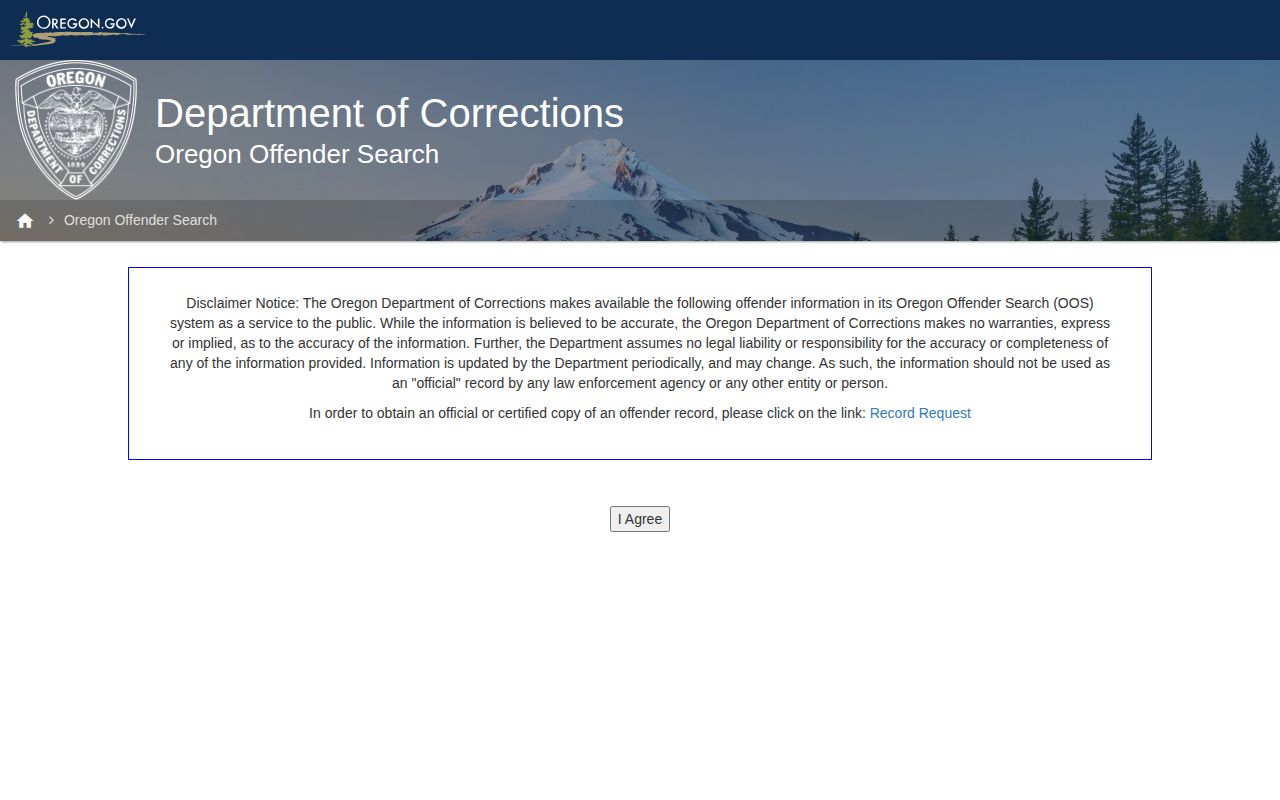
The interface supports the state-prison route, while Harney jail and court records remain necessary for county custody.
Oregon Earned-Time Release Rules
ORS 421.121 is the central modern earned-time statute for eligible felony sentences after November 1, 1989. It links reductions to appropriate institutional behavior and adult basic-skills participation, subject to listed exclusions. The statute caps eligible credits at 20 percent of the total DOC term and says they cannot reduce actual prison confinement below six months. Administrative rules govern granting, retracting, and restoring credits.
Oregon's Measure 11 scheme is often reduced to an “85 percent rule,” but that shortcut is unsafe. ORS 137.700 sets mandatory minimum terms for listed offenses and bars sentence-reduction programs during those minimums, subject to legislated exceptions. Do not take 85 percent of every sentence. The conviction statute, offense date, judgment, and any exception control.
Harney County did not publish a verified jail good-time formula or weekend-release rule in the research sweep. County calculation depends on the imposed term, time-served credit, concurrent or consecutive cases, holds, and local application. Request the jail calculation instead of applying DOC percentages.
Why Harney Release Dates Change
A PRD may move when the legal or factual inputs change. Preserve the old and current screens as dated snapshots, then ask the custodian which action produced the revision.
| Factor | Possible effect |
|---|---|
| Amended judgment | Changes sentence terms or time-served credit. |
| Concurrent or consecutive correction | Changes how multiple terms combine. |
| Earned-time grant, loss, or restoration | Moves an eligible DOC date within legal limits. |
| New sentence, warrant, or hold | May prevent release even when one term ends. |
| Board action | May set, postpone, reduce, or reconsider an old-law parole date. |
| Sentence recalculation | Updates presentence credit or another computation input. |
A Board calendar entry predicts a hearing, not its result. The operative decision is generally a Board Action Form or order. A Board date also does not establish the prison-gate timestamp.
Confirm a Harney Release Date
Use VISOR for current Oregon custody or supervision and event notices. It can alert a registrant to a PRD change, move, or release. DOC describes certain updates as near-real-time and every two hours, which still permits delay. The Harney County VINE Inmate Check explains the current VISOR registration path.
For exact state execution, confirm with DOC and OOS. For Harney County Jail, call 541-573-6056 and request the booking release event. Review the Circuit Court judgment or release order for legal authority, then check another custodian if the jail disposition records a transfer. This separation prevents a court date, notification time, and actual release from being merged.
Harney Sentence Recalculation Checks
Oregon's active sentence-recalculation work is the distinctive issue for Harney release-date research. The DOC recalculation FAQ identifies OOS as the official release-date source and explains that amended judgment language can affect presentence incarceration credit under ORS 137.370(4). It also says DOC cannot release before its calculated date or hold a person after time served.
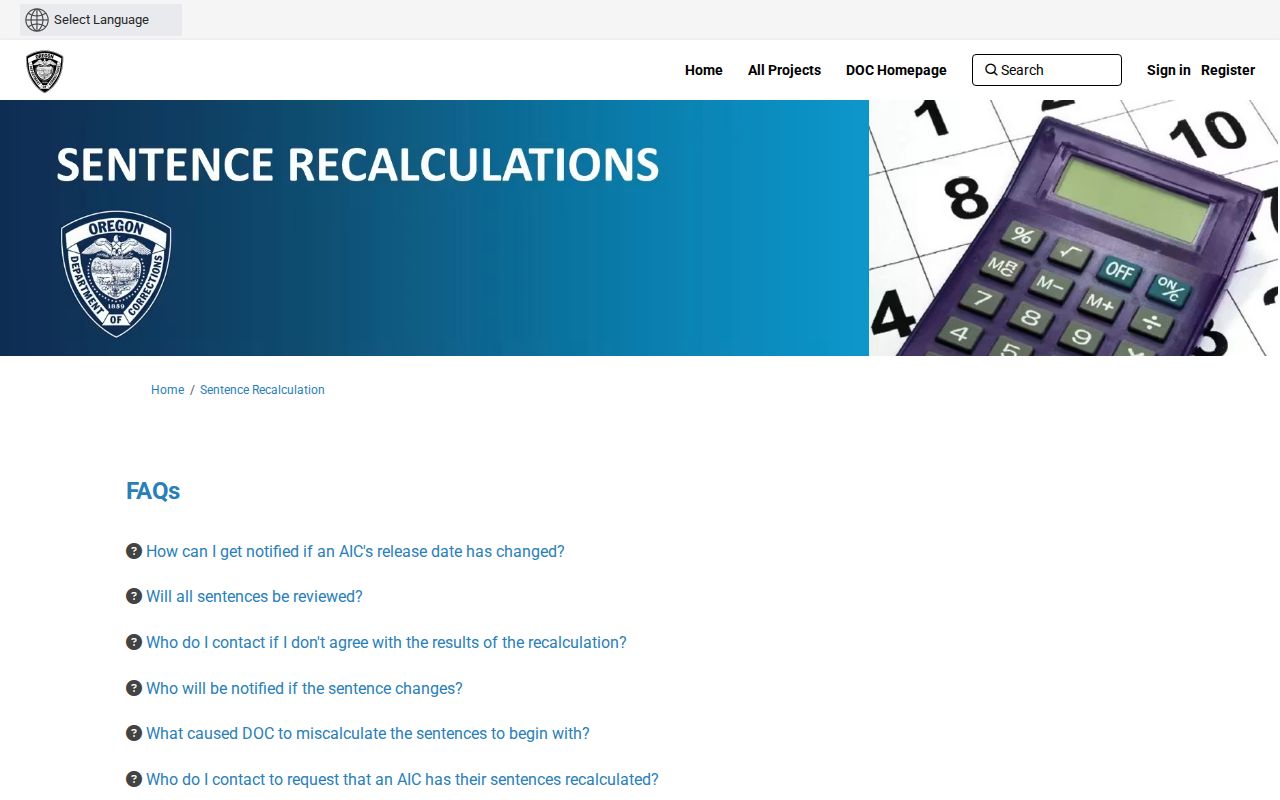
The official notice supports using the current OOS computation, complete judgment, and VISOR change alerts instead of hand arithmetic.
When sources conflict, keep each label. Ask whether a date was ordered by the court, projected by DOC, entered in a database, or actually executed. The current custodian's record controls until changed through the legal process.
Harney Old-Law Parole Dates
Some older parole-system cases follow rules in effect when the crime occurred. A Prison Term hearing may set a projected parole release date or decline to set one. Later hearings can postpone, reduce, or reconsider release. Many modern determinate sentences instead lead to post-prison supervision without discretionary parole.
Read the actual Board action, judgment, offense date, and governing statute. Do not apply modern earned-time assumptions to an old-law case. After actual prison release, Harney County Community Corrections may handle local supervision, but that office is not the source of the prison release computation.
Note: A supervision start date shows that confinement ended under the record, not that the entire correctional sentence was discharged.
Harney Jail Release Calculations
For a county sentence, request the existing sentence calculation and release record for the named booking. Include full name, date of birth or booking number, judgment and case number, imposed term, recorded time-served credit, and any concurrent or consecutive case. Ask staff to identify the authority for the calculation rather than asking them to solve a hypothetical date.
The Harney sheriff form covers Jail records and can be submitted at 485 N. Court Avenue, Burns, OR 97720, or faxed to 541-573-8383. Request electronic delivery and a fee estimate. ORS 192.324 generally requires acknowledgment or completion within five business days, but full production can take longer under ORS 192.329 and applicable pauses or exceptions.
A county release record should include the executed timestamp and disposition. A calculated sentence end, signed court order, and actual jail event can occur at different times. Another warrant or hold can keep a person in custody after one case authorizes release.
Harney Release Date Evidence
Build the date from records that serve distinct purposes. Do not merge a projected date, court date, notice time, and physical release into one unlabeled answer.
| Record | What it proves |
|---|---|
| Judgment or amended judgment | The sentence ordered and relevant credit language. |
| OOS result | DOC's current public PRD and correctional status. |
| Board action | The decision in an applicable parole-system case. |
| VISOR event | A custody, move, PRD-change, or release notification. |
| Jail or DOC release event | The custodian's executed date and disposition. |
| Supervision record | Post-release oversight, not final discharge unless labeled so. |
When a state record conflicts with the judgment, request DOC sentence-computation records and the complete court file. DOC executes the court sentence but does not rewrite it. A calculation dispute cannot be resolved by counting calendar days from the imposed months.
Harney Release Date Terms
Corrections labels can look similar while marking different stages. Use the exact term shown in the source.
- Projected release date
- The custodian's current calculated date, subject to lawful change.
- Actual release
- The recorded event ending confinement with that custodian.
- Parole
- Conditional community release in an eligible parole-system case.
- Post-prison supervision
- Community oversight after a prison term.
- Final discharge
- The end of the represented sentence or supervision, subject to other cases.
A person can be actually released from prison yet remain on post-prison supervision. Another person can complete a Harney jail term and transfer directly to DOC. These outcomes require different records and should never share one release label.
Use “not established” for a date that no source confirms. Do not turn an empty search result into a zero date or assume a sentence ended because a person left one facility. A move between custodians may happen before OOS, VISOR, or the receiving roster updates. Confirm the chain with the sending record, receiving record, and court authority.
Request Harney Sentence Records
When OOS and the judgment do not resolve a state projected release date, request the underlying DOC records. Identify the person by full name and SID, then name the judgment and case. Ask for the admission record, sentence computation, PRD history, time-served-credit calculation, amended-judgment processing, release certificate or order, actual release date, transfer record, and supervision discharge when those records apply. A narrow inventory gives DOC a clearer search target than a request to explain when someone will leave.
Obtain the complete Harney Circuit Court judgment at the same time, including amended judgments and language awarding presentence incarceration credit. The free online register is useful for discovery, but an official copy from the filing court controls when wording matters. Record which judgment version DOC used. If a later order changed the sentence, preserve the earlier and current calculations with their source dates.
For old-law parole cases, request the Board Action Form or order by person, SID, and hearing date through the Board records-request route. Check whether a later Board action superseded it. A Prison Term hearing can set or decline to set a projected parole date, while a postponement or future-disposition action can change the path. The governing rules are those applicable at the offense date.
County, state, and Board dates should remain separate in the final timeline. A Harney jail transfer date marks movement into another custodian. A DOC PRD predicts the end of prison confinement under the current computation. A Board date reflects an applicable parole decision. A supervision end date may mark discharge. Only the executed agency record proves that its corresponding event occurred.